

A Broadcast Booth That Looks Different 🏈
There’s something happening at the Super Bowl this year that’s easy to miss if you aren’t looking for it, but once you see it, you can’t look away. If you’ve been scrolling through the pregame coverage or catching the sideline reports, you’ve probably noticed something that would’ve felt like a glitch in the matrix not long ago: women are running the show.
This isn’t just about a single “diversity hire” tucked away at the edge of the desk. These are the lead voices and the heavy-hitters shaping the entire conversation around the biggest sporting event in America. Just look at the lineup for Super Bowl LX as the Patriots take on the Seahawks (a rematch of the famous 2015 game!):
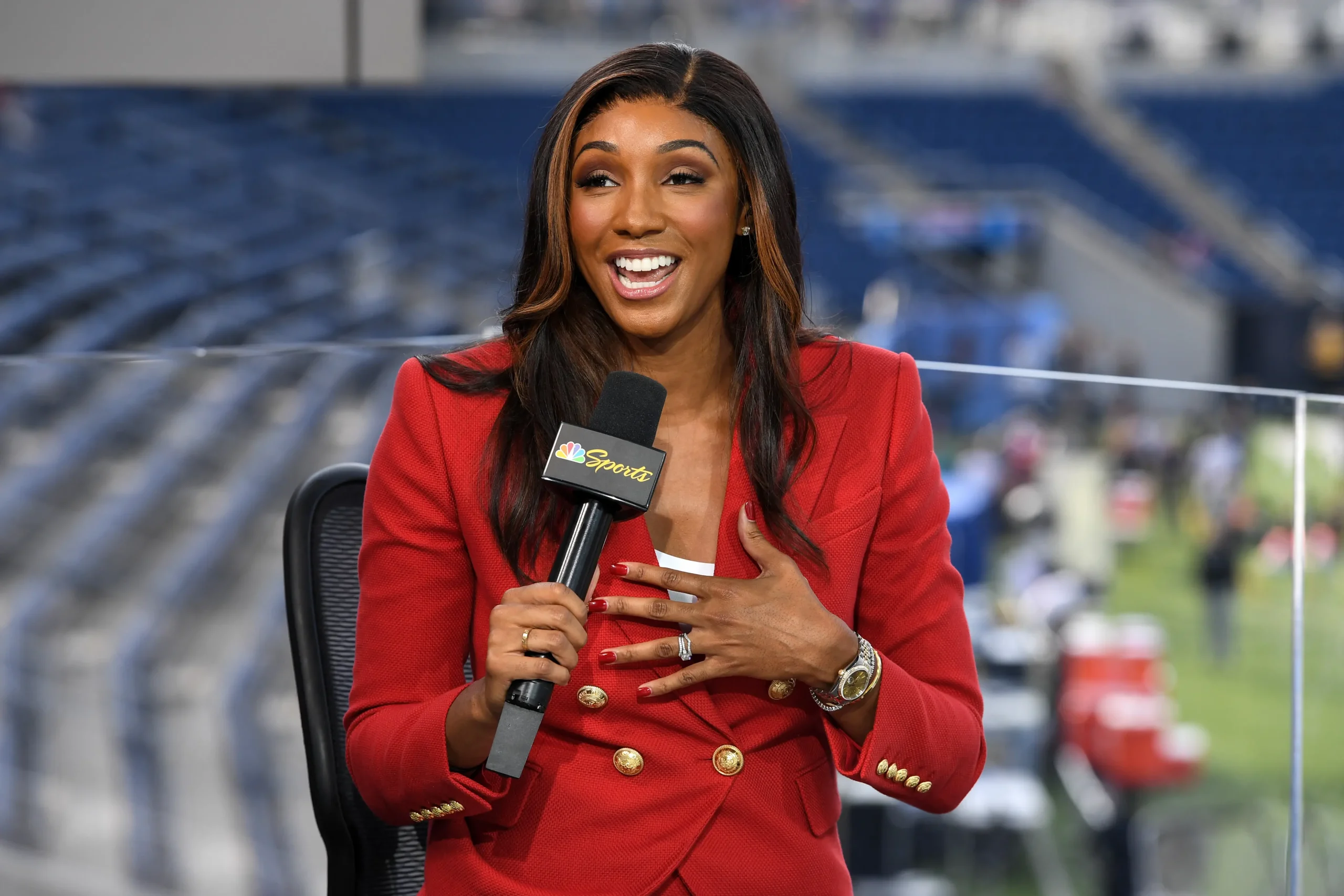
- Maria Taylor is the anchor of the massive five-hour pregame marathon. But the real moment of note? She’s the one holding the mic for the Vince Lombardi Trophy presentation on the field.
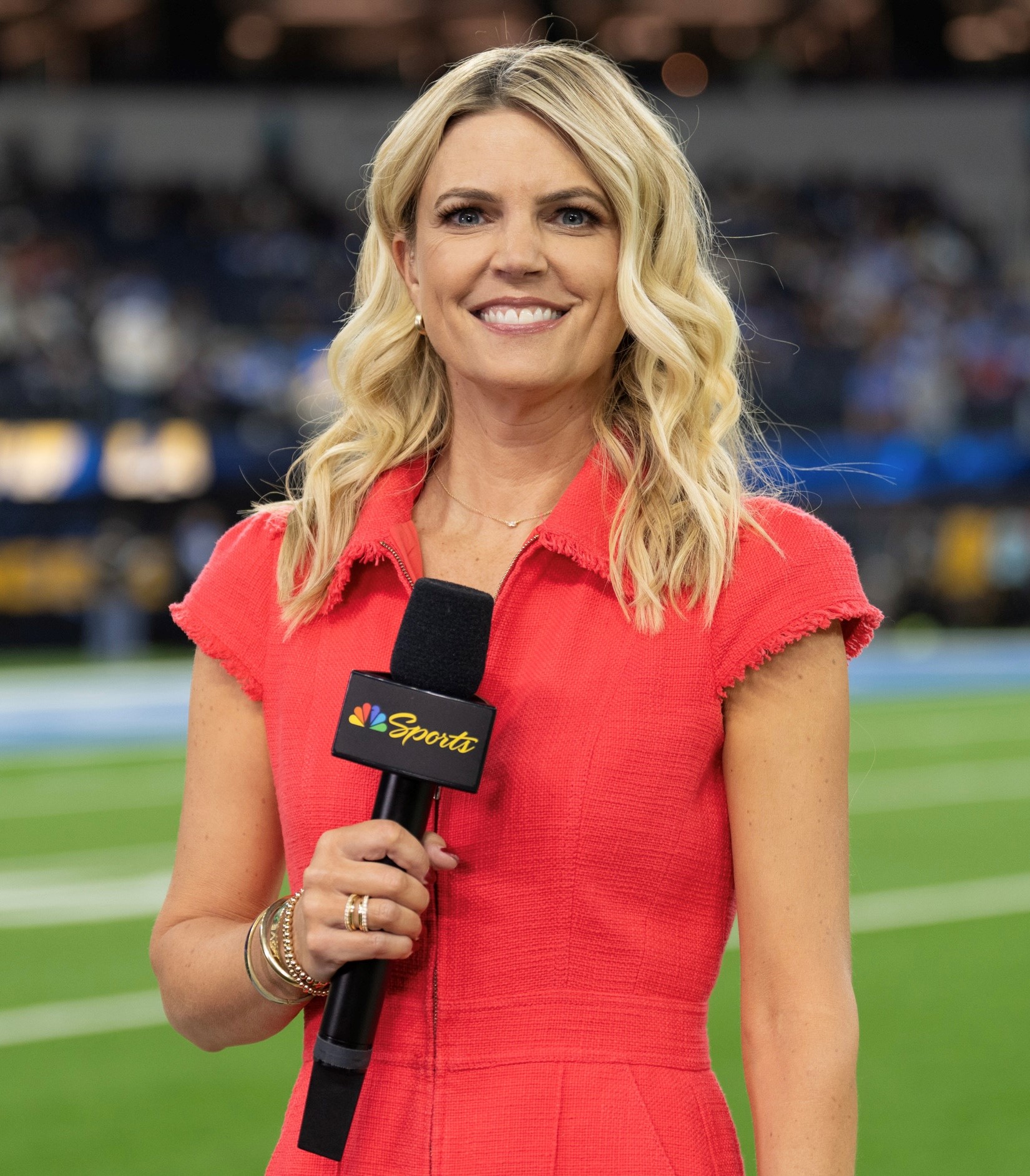
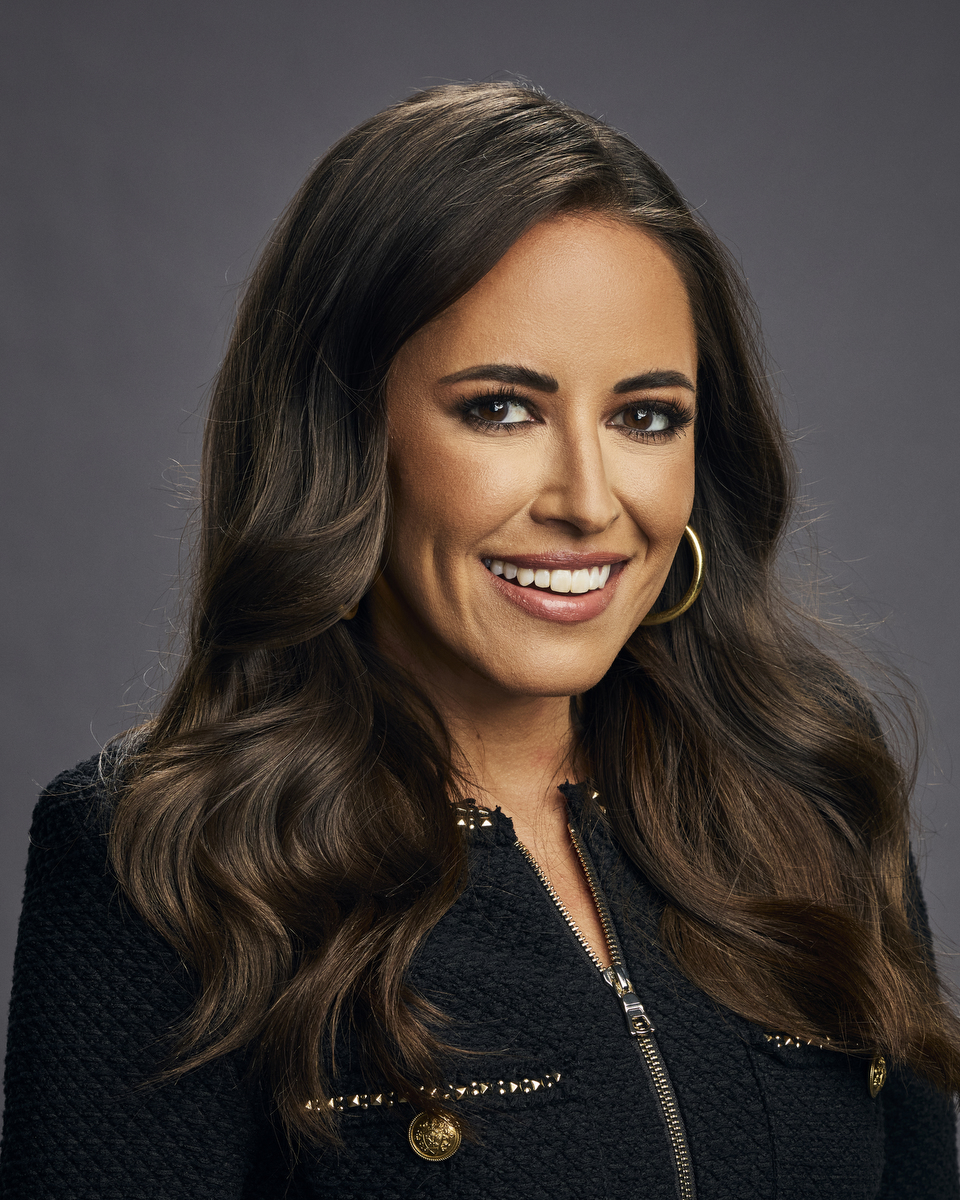
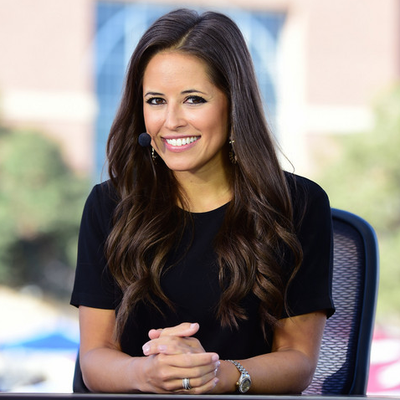
- Melissa Stark and Kaylee Hartung aren’t just assisting; they’re leading the high-pressure reporting, owning both sidelines simultaneously.
- Adriana Monsalve is steering the ship on Telemundo, making sure this shift lands with every demographic in the room.
And you know what? That’s the real win. But as the broadcast moves seamlessly from one lead woman to the next, it’s impossible to ignore that our “picture of authority” has finally shifted. Seeing this level of competence at this scale isn’t just a nice trend – it’s a massive cultural milestone.
The Season the Floodgates Opened
This didn’t just happen overnight. The 2025/2026 season felt like the moment the floodgates finally stayed open. We’ve seen a deliberate, season-long shift in how networks are positioning leadership:
- The “Double Sideline” Strategy: This year, networks finally moved away from the “token” reporter. Having two women working the sidelines became the standard for every major game.
- Moving Past “Fluff”: All season, reporters like Laura Rutledge, Melissa Stark, and Kaylee Hartung have been the lead voices on strategy and injury updates. They’ve moved far beyond the “human interest” pieces and right into the core of the game.
Why Visibility Matters
Social change rarely starts with a dramatic speech. It starts with visibility – people seeing something so often that it eventually stops feeling “new.”
The only way a society gets comfortable with leadership is by seeing it. Again and again. In every form. Whether it’s Maria Taylor commanding a six-hour broadcast or a woman handing over the Vince Lombardi Trophy, authority is losing its gender. When you see women owning every high-stakes minute of the most-watched broadcast in history, power stops looking like a “breakthrough” and starts looking like the standard.
Sports as a Cultural Rehearsal Space
Sports have always been our cultural rehearsal space. Integration in athletics prepared the country for integration elsewhere. Now, we are in a rehearsal for political leadership.
The “hard to imagine” barrier that often surrounds the prospect of a woman President is rooted in a lack of familiarity with women in high-stakes executive roles. If a woman can hold the attention of 100 million people while managing the chaos of a Patriots vs. Seahawks championship, the jump to the Oval Office isn’t a radical leap anymore – it’s an “of course.”
The “Benito Bowl”: A New Language of Power
This shift doesn’t stop in the broadcast booth; it’s happening on the stage, too. Tonight’s halftime show, headlined by Bad Bunny, is another massive milestone. For the first time in 60 years, the Super Bowl stage belongs to an artist who refuses to “cross over” by watering down his language. By performing a headlining set largely in Spanish, he’s dismantling the old, narrow definitions of “Americanness.”
The guest list only drove that point home. When Lady Gaga joined him for a salsa-infused version of ‘Die With a Smile’ and Ricky Martin took the stage, it wasn’t just a concert—it was a statement. These icons weren’t there to ‘Americanize’ Bad Bunny; they were there to join him in a new, bilingual American reality.
It’s a powerful parallel to what we’re seeing with anchors like Adriana Monsalve and Maria Taylor. Tonight also featured Puerto Rican Sign Language (PRSL/LSPR) on the main stage, a distinct dialect that refuses to be “standardized” into ASL. Whether it’s the language being spoken or the person holding the trophy, the “picture of leadership” is being redrawn in real-time. As the set ended, a giant screen flashed a message that felt like a direct answer to the ‘harsh reality’ of our current political climate: ‘The only thing more powerful than hate is love.’ It’s a reminder that authority doesn’t have to look or sound like it did twenty years ago to be valid, powerful, and central to the American story.
And the same shift we’re seeing in language and cultural visibility is happening in how women are accepted as leaders.
Moving from the “Neck” to the “Head”
This movement from the sidelines to the center stage is a direct challenge to the “old rules” of how women were told to lead. For a long time, culture implied that a woman’s power was most effective when it was subtle or “behind the scenes.”
Think back to that line from the 2002 movie My Big Fat Greek Wedding: “The man is the head, but the woman is the neck, and she can turn the head any way she wants.” It was funny, but it reflected a limited reality – the idea that a woman’s power had to be hidden to be palatable.
We saw this in literature, too. When the first Harry Potter book came out in 1997, J.K. Rowling used her initials because her publisher feared boys wouldn’t read a book by a woman. They were trying to disguise her gender to make her leadership acceptable.
But we have always had women who refused that script. Long before this “floodgate” season, icons like Barbara Walters were shattering the mold. In 1976, she became the first female network news co-anchor, and her legendary interviews with world leaders proved that a woman’s voice was the one the world needed to hear. Diane Sawyer followed, commanding the anchor chair at World News and 60 Minutes with an authority that was undeniable.
Walters didn’t just climb the mountain; she built a platform for others. When she created The View in 1997, she wanted to find “women of different generations, backgrounds, and views” to speak for themselves. Upon her retirement, she summed up her mission perfectly:
“How proud when I see all the young women who are making and reporting the news. If I did anything to help make that happen, that is my legacy.”
These women weren’t the “neck” guiding things quietly; they were the head, the heart, and the voice of the newsroom. And at Super Bowl LX, we’re seeing the next step. Women are the anchors, the lead analysts, and the visible authorities. They aren’t just steering the conversation anymore; women are holding the microphone.
Catching Up With the World
The truth is, the U.S. is actually late to this party. Around the globe, women have reached the highest levels of political leadership decades ago:
- Mexico: Claudia Sheinbaum (President, 2024)
- Honduras: Xiomara Castro (President, 2022)
- Chile: Michelle Bachelet (President, 2006–2010; 2014–2018)
- Italy: Giorgia Meloni (Prime Minister, 2022)
- Panama: Mireya Moscoso (President, 1999–2004)
Actually, as of early 2026, there are roughly 30 countries worldwide led by women.
The talent has always been here. We’ve seen trailblazers like Madeleine Albright and Condoleezza Rice command the world stage. We saw Hillary Clinton serve as a powerhouse NY Senator and Secretary of State before putting 18 million cracks in the glass ceiling. She passed the chisel and the sledgehammer to Kamala Harris, who broke one of the biggest barriers in our history as the first female Vice President before her own historic run for the presidency in 2024. Her concession speech echoed what her mother taught her: “You may be the first to do many things, but make sure you’re not the last.”
That mission of “not being the last” is the thread that connects all these giants – from Dianne Feinstein, a San Francisco icon who shattered every ceiling in her path, to Justice Sandra Day O’Connor, the first woman on the Supreme Court, who said: “It’s nice to be first, but don’t be the last.”
But Ruth Bader Ginsburg (RBG) probably gave the most iconic response. When asked when there would be enough women on the Supreme Court, she would answer: “When there are nine.” She pointed out that for most of American history, there were nine men on the bench and no one ever thought to ask if that was “enough.” To her, true equality meant reaching a point where a woman in power wasn’t a “special occasion” – it was just the way things were. She viewed her role not as a token, but as a duty to pave the way, urging us all to “leave tracks” so that we leave the world a little better for those who follow.
Yet, we are still navigating a harsh reality where a reality star with televised footage of him dehumanizing women, a convicted felon (34 felony counts) spewing one racist remark after another, could win over highly experienced women of integrity. It shows that “competence” isn’t the finish line – normalization is.
If countries with vastly different histories can elect women to lead, why is the U.S. presidency still out of reach? Big cultural milestones build through small, visible steps. Today, we aren’t just watching a game; we’re watching a picture of leadership finally being normalized. And in a sport where women typically don’t play. That’s pretty cool. Hopefully, sports can be the final rehearsal that brings this vision to life at the voting booths.
The World is Watching
The U.S. might still be in rehearsal, but the rest of the world is already tuned in. All through the broadcast, we’ve seen watch parties from Australia to Mexico, and from Brazil to the UK, Germany, Spain, and Canada.
As these 130 countries watch Maria Taylor anchor the Super Bowl Sunday coverage and Bad Bunny command the stage in Spanish, they are seeing how many of us want the U.S. to be – a place where women can lead, and you can speak any language you want.
The question isn’t whether the world is ready to see a woman in charge – they’ve been ready for decades. The question is when the U.S. will finally stop practicing and join them.
Are you watching the game today? Does the broadcast feel different to you, or does it just feel like no big deal?
Update: Congratulations to the Seattle Seahawks! (29-13)
Did know Maria Taylor and the Seahawks’ head coach, Mike Macdonald, actually went to the same high school in Georgia? Seeing them share that trophy podium was a total full-circle moment for “normalization.”
Related Me We Too posts:
The Bad Bunny half time show at Super Bowl LX was awesome!
I love how the women anchored and did the sideline interviews – awesome! #SuperBowlLX
I’m not surprised that Trump is not going to Super Bowl LX
Really just watching the Super Bowl Halftime Show
Not planning on watching the Super Bowl commercials either … boring.
I think that the super bowl is boring
I like nfl football I love my cats and I love movies
I’m not very into football – each time they tackle it’s ouch! concussion maybe?
I love football, I dislike lie
I love football and football is awesome
I prefer rugby to american football
I my self like football and take part in playing it. I then enjoy watching rugby game. Great
I’m crazed at the idea NFL is called football yet is mostly all hands #wtf
Football is the most famous sport
My favourite game is surely football.Then Rugby.This is what I watch.
COWBOYS ARE MY FAVORITE FOOTBALL TEAM
Football is an addictive game.
I really like playing football, I do it with a passion.
I will never understand football.
There is one kind of game that I can never fail to play daily. That is football.
I can’t go a weekend without football.
I don’t pay attention to Football.







The Current 30: Women in Power (2026)
Note: This list includes Presidents and Prime Ministers holding Chief Executive authority.
Barbados: Mia Mottley (Prime Minister, May 2018)
Denmark: Mette Frederiksen (Prime Minister, June 2019)
Moldova: Maia Sandu (President, December 2020)
Samoa: Fiamē Naomi Mataʻafa (Prime Minister, May 2021)
Tanzania: Samia Suluhu Hassan (President, March 2021)
Honduras: Xiomara Castro (President, January 2022)
India: Droupadi Murmu (President, July 2022)
Italy: Giorgia Meloni (Prime Minister, October 2022)
Slovenia: Nataša Pirc Musar (President, December 2022)
Bosnia and Herzegovina: Borjana Krišto (Chairwoman, Council of Ministers, January 2023)
Trinidad and Tobago: Kamla Persad-Bissessar (Prime Minister, returning term 2025; President Christine Kangaloo, March 2023)
Latvia: Evika Siliņa (Prime Minister, September 2023)
Dominica: Sylvanie Burton (President, October 2023)
Marshall Islands: Hilda Heine (President, January 2024)
DR Congo: Judith Suminwa (Prime Minister, April 2024)
Malta: Myriam Spiteri Debono (President, April 2024)
North Macedonia: Gordana Siljanovska-Davkova (President, May 2024)
Iceland: Kristrún Frostadóttir (Prime Minister, December 2024; President Halla Tómasdóttir, August 2024)
Mexico: Claudia Sheinbaum (President, October 2024)
Vatican City: Raffaella Petrini (President of the Governorate, March 2025)
Tunisia: Sara Zaafarani (Prime Minister, March 2025)
Namibia: Netumbo Nandi-Ndaitwah (President, March 2025)
Japan: Sanae Takaichi (Prime Minister, October 2025)
Thailand: Paetongtarn Shinawatra (Prime Minister, August 2024)
Lithuania: Inga Ruginienė (Prime Minister, August 2025)
Ukraine: Yulia Svyrydenko (First Vice PM/Acting PM roles, October 2025)
Liechtenstein: Brigitte Haas (Prime Minister, 2025)
Suriname: Jennifer Geerlings-Simons (President, 2025)
Ireland: Catherine Connolly (President, November 2025)
Bulgaria: Iliana Iotova (President, January 2026)