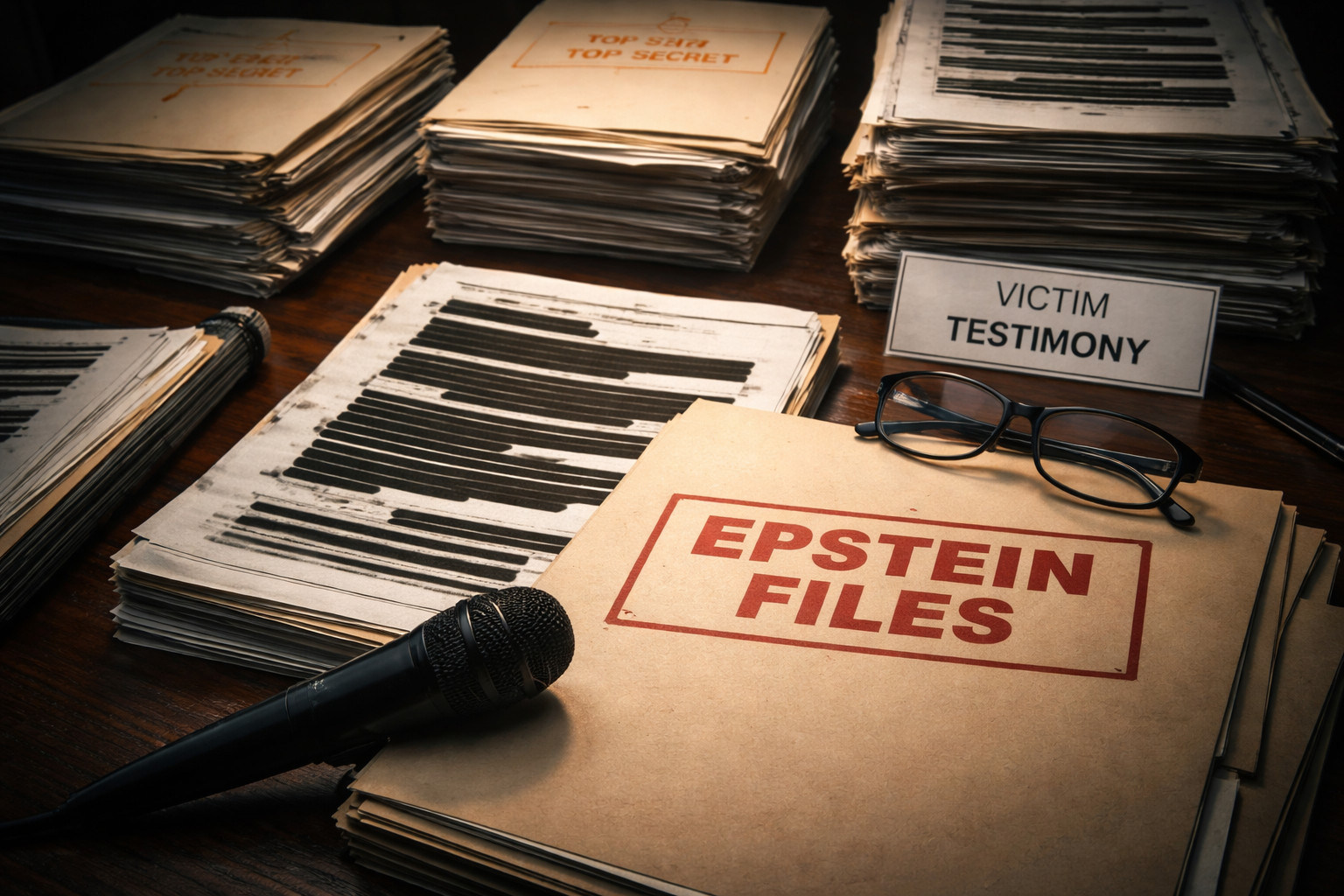
Melania Trump has recently called on Congress to hold public hearings on the Epstein case and allow survivors to testify under oath. That sounds, on the surface, like a gesture toward accountability.
But it misses the point entirely.
We do not have a shortage of testimony in this case. Survivors have already spoken – to investigators, in sworn statements, and in court proceedings for years. Their accounts are not absent from the record. They are the record.
What remains missing is not narrative. It is disclosure.
The real problem: substituting spectacle for transparency
Washington has a habit of mistaking visibility for accountability – as if putting trauma on a stage is equivalent to delivering truth. But hearings are not evidence; they are performance structures.
When a government leans on repeated testimony instead of releasing documents, it shifts the burden of “proof” back onto the people who have already carried it for decades. That is not transparency. It is deferral.
The Epstein files problem
Despite the DOJ claiming that the January release was ‘final,’ a massive discrepancy remains: of the 6 million pages initially identified by the FBI, only 3.5 million have been made public. This leaves over 2.5 million pages – nearly half the record – buried or obscured by heavy redactions.
Some investigative reports and survivor advocates have made even more aggressive claims, suggesting that the digital data retrieved from Jeffrey Epstein’s properties was so vast (over 300 gigabytes) that the current release might represent as little as 2% of the actual evidence the FBI holds.
Officials cite privacy, but the effect is a fragmented public record that shields the names of co-conspirators.
In that gap, pressure falls on survivors to re-enter the spotlight – as if their credibility, rather than the state’s documentation, is what still needs testing.
The Bondi question: “burn books” and market deflections
The controversy surrounding former Attorney General Pam Bondi highlights the hypocrisy of this “truth-seeking” mission. Before she was fired, Bondi treated congressional oversight like a partisan game.
During her February testimony, photographers revealed that her binder was a literal “burn book” – containing search histories and prepared insults for the lawmakers questioning her. When Representative Jamie Raskin and others pressed her on why the DOJ was withholding millions of pages, Bondi didn’t provide a legal justification. She lost her composure and screamed over the committee: “The Dow is over 50,000! … That’s what we should be talking about!” She wasn’t there to find justice; she was there to pivot to the stock market.
Now that Bondi’s out of office, Todd Blanche – the man who conducted the 2025 Maxwell interview while serving as Deputy Attorney General and who is now the Acting Attorney General – is leading a DOJ that claims Bondi shouldn’t have to testify because she is a “private citizen.” But the subpoena is in her name personally, and a job change doesn’t erase a legal obligation to the truth.
The Hillary Clinton precedent
The double standard here is staggering. Just last January, the same committee insisted that a “subpoena is not a suggestion” when it came to Hillary Clinton. They forced her into hours of deposition, threatening her with criminal contempt despite her being a “former” official.
Afterward, Clinton called the proceedings “repetitive” and accused the administration of a “continuing cover-up” for refusing to hold the hearings in public. If a former Secretary of State can be compelled to answer for hours of political theater, a former Attorney General who personally managed the most sensitive sex-trafficking files in history must be held to the same standard.
You cannot hide behind a “burn book” and stock market numbers to avoid a personal subpoena.
Stop making victims the evidence
The deeper issue is structural. Testimony can be questioned, reframed, and dissected. Memory can be challenged. Survivors can be placed back under a microscope they have already endured.
But documents do not cross-examine themselves.
- Bank records do not forget.
- Emails do not reinterpret themselves.
- Flight logs do not evolve under pressure.
If there is a genuine commitment to truth, the priority is not more televised hearings. It is the release of the evidence that makes those hearings unnecessary.
The survivors’ response: “We want accountability, not a circus”
Survivors have already begun to push back against the First Lady’s proposal. In a joint statement released today, Maria and Annie Farmer made it clear that they don’t need a new stage; they need the evidence the government is currently sitting on.
“We can’t speak for other survivors, but what we want is accountability, transparency, and justice,” they stated. They pointed directly to the Department of Justice’s refusal to release the remaining records – including Maria’s own complete FBI records from 1996. “If the federal government is truly committed to supporting survivors, it would ask us what we want and should follow the facts wherever they may lead.”
Their message is a direct rebuke to the idea that another hearing is the solution. As Jena Lisa Jones, another survivor, noted in a recent interview, the focus on public spectacle over document release has turned the quest for justice into a “circus show.”
No more stagecraft
No, we do not need another carefully staged moment of public testimony to “complete” the Epstein record. We need the record itself. All of it – unredacted except where genuine victim protection requires it.
Justice does not come from asking survivors to relive what the state has already documented. It comes from the state finally showing what it already knows.
Release the files.
Related Me We Too polls:
Pam Bondi should be impeached.
Pam Bondi’s book of insults for the democrats at the hearing was like the movie “Mean Girls”