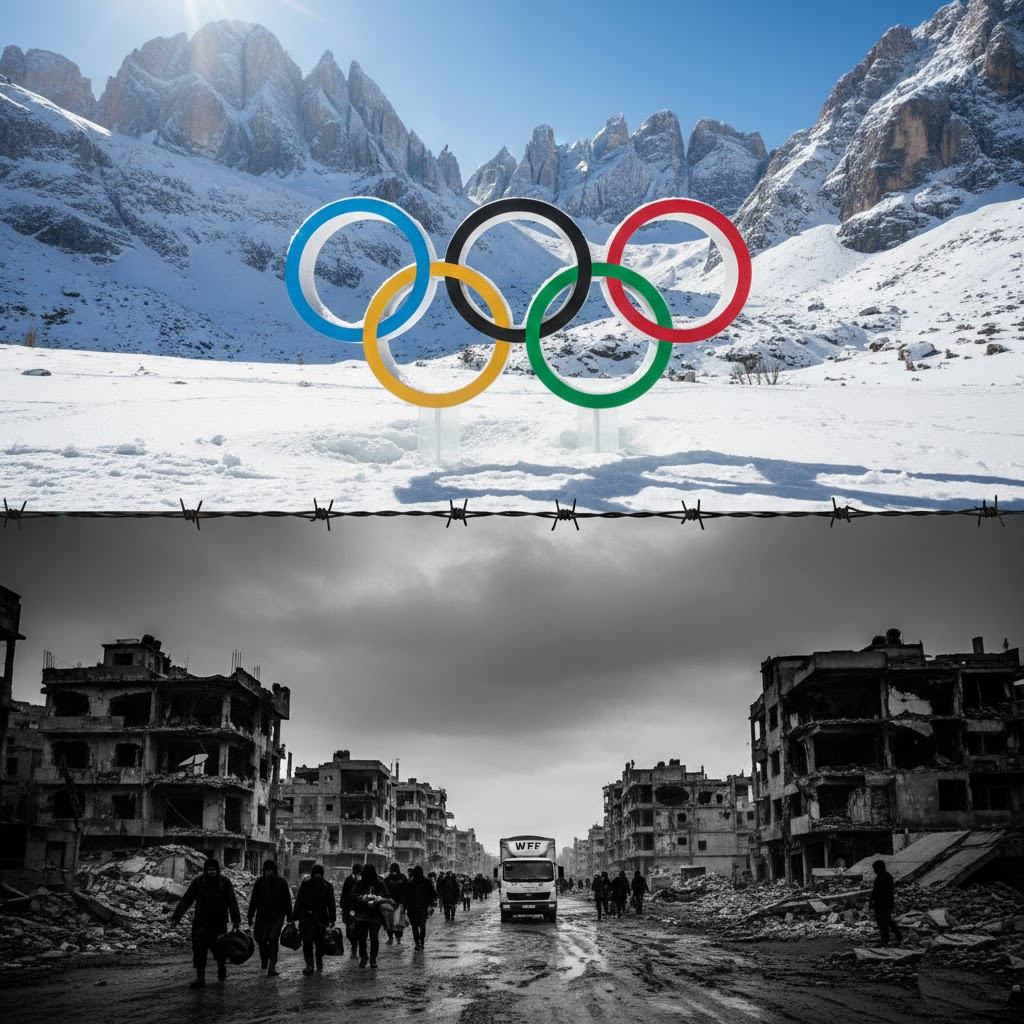
This week, as athletes arrive in Italy for the 2026 Winter Olympics, the United Nations is officially invoking the Olympic Truce. It’s an ancient concept – a 52-day global ceasefire designed to let humanity catch its breath while we celebrate the world’s best athletes.
But as the torch is lit, the “Truce” feels less like a tradition and more like a ghost. In a world currently defined by active, brutal conflicts, the gap between the pristine snow of Milan-Cortina and the reality of the front lines has never been wider.
The Conflict Reality Check
The UN’s request for a 52-day pause is meeting a wall of reality. Looking at the major headlines today, the “Truce” is already being tested – and failing:
- Ukraine: There is no ceasefire. While a brief, temporary halt in strikes against the energy grid was attempted last week, it didn’t stop the violence. Just yesterday, a targeted Russian drone strike on a bus in the Dnipropetrovsk region killed 12 miners returning from their shift. The war isn’t pausing for the podium; it’s grinding on through -20°C temperatures.
- Gaza: While a fragile ceasefire has been in place since October, it is currently hanging by a thread. Airstrikes this past Saturday killed over 30 people, and the “peace” is more of a tense, violent standoff. The Olympic Truce is being used as a diplomatic lever to keep this agreement from collapsing entirely as the Rafah crossing only recently reopened for limited movement.
- Sudan: In one of the world’s most severe humanitarian crises, there is no truce in sight. With famine confirmed in regions like North Darfur and South Kordofan, the 52-day Olympic window isn’t a “nice idea” – it is a life-or-death necessity for getting food convoys through active war zones.
The Dissonance of the Games
There is a profound discomfort in watching elite athletes compete for medals while knowing these conflicts are active. It can feel like the Olympics are a high-budget distraction – a way to look away from the world’s problems.
But maybe the value of the Truce isn’t in its success rate (historically, it’s 0-17). Its value is in the uncomfortable mirror it holds up to us. By formally asking for peace, the international community forces a comparison: Why can we agree to rules on the ice, but not on the ground?
Beyond the Podium
We shouldn’t have to ignore the war to enjoy the skating. In fact, the spirit of the Games suggests we should do the opposite. The Olympics provide a rare moment where every violation of peace is magnified by a global spotlight.
While we cheer for the underdogs in Italy, the real “win” for the next 52 days won’t be found on a scoreboard. It will be found in whether or not the international community can use this window to push for actual humanitarian corridors and a “dignified end” to the fighting.
The Games officially begin this Friday, February 6. The clock on the Truce is already ticking. The world is watching to see who – if anyone – will actually honor it.
Beyond the Podium: Connect at GymChat.com
The Olympics remind us of the heights human beings can reach, but the heart of sport lives in every gym, park, and club around the world. Whether you are just starting your fitness journey, training for your first local meet, or competing at an elite level, staying connected is what keeps the momentum going.
A special shoutout to Gym Chat Sports Network at gymchat.com.
Gym Chat isn’t just for the pros; it’s a social fitness network designed for athletes of all levels – from beginners and casual enthusiasts to competitive and elite performers. It’s a space to document your progress, find mentors, and build your own community:
- Multimedia Sharing: Upload and view photos, videos, and music from global competitions or your own daily workouts. It’s the perfect place to share your “personal bests.”
- A Resource for Everyone: Use their comprehensive directory to find and review sports clubs and gyms in your area, or browse the classifieds for the gear you need to get started.
- The Global Forum: Join the conversation on their active message boards. Whether you’re looking for beginner tips, coaching advice, or a place to discuss the latest Olympic results, there is a seat at the table for you.
- Build Your Brand: Competitive athletes and local clubs can use Gym Chat’s easy tools to build their own dedicated websites, manage schedules, and share results without needing any tech experience.
Sport is about community. No matter where you are on your athletic path, head over to GymChat.com and find your people.
Related Me We Too posts:
I am good at skating.I always train my friends and classmates most of the time when Iam free.
Figure skating should be considered art ❤️
figure skating is probably the coolest winter sport
I also like to watch beach volleyball and surfing in the Olympics
It is fun to watch the best of the best in the USA Olympics basketball team
I also like to watch beach volleyball and surfing in the Olympics
My favorite summer Olympic events to watch are gymnastics, diving, and basketball