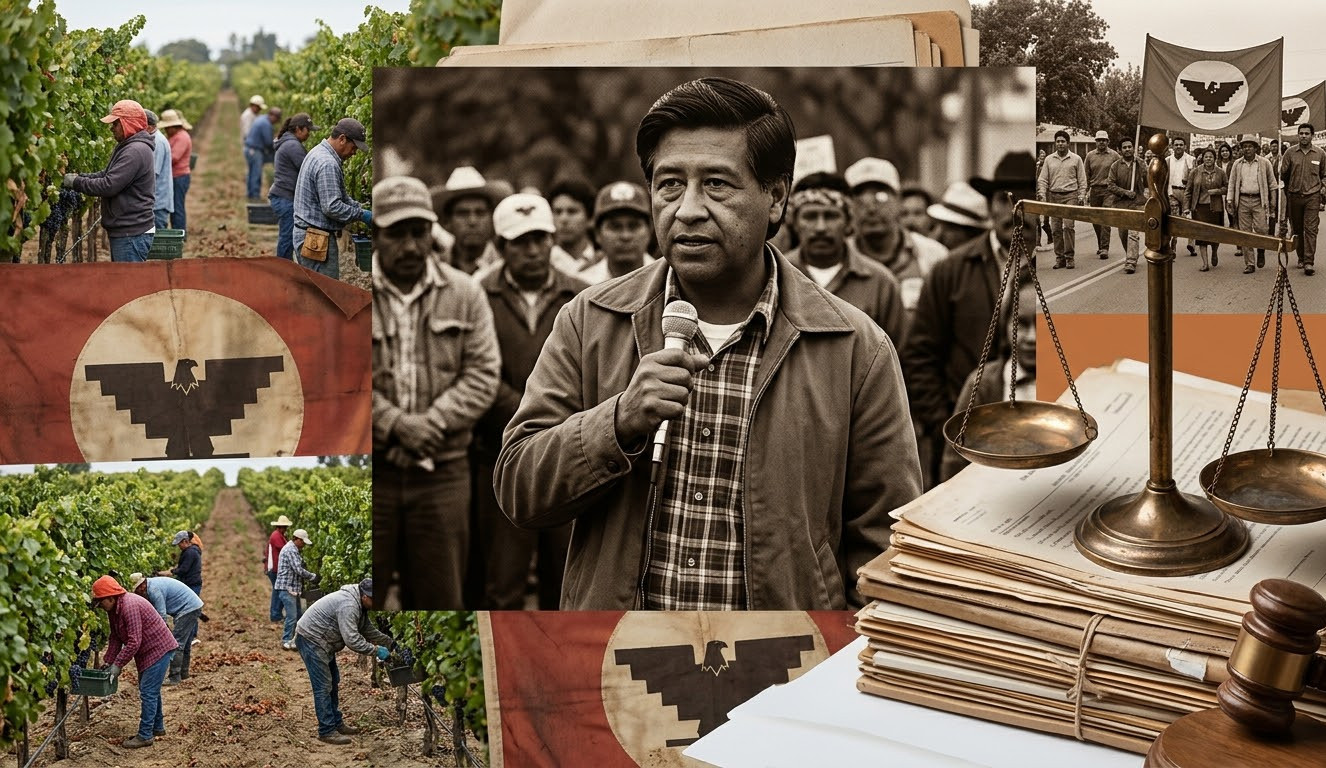
For decades, Cesar Chavez stood as the face of the American labor movement – a man associated with non-violent strikes, spiritual fasts, and an unwavering commitment to the marginalized.
But on March 17, 2026, that image began to fracture.
The organizations Chavez founded now find themselves confronting serious allegations about the conduct of their own civil rights leader. The United Farm Workers (UFW) acknowledged the shock and gravity of these claims in stark terms:
“Allegations that very young women or girls may have been victimized are crushing.”
In response, the UFW and the Cesar Chavez Foundation announced they will withdraw from all annual celebrations of Chavez’s birthday on March 31.
This is not a minor scheduling change.
It reflects the emergence of deeply troubling allegations surrounding Chavez’s conduct during his time leading the union. While the UFW noted that some reports involve ‘family issues’ that are not their place to comment on, they described allegations involving the abuse of young women or minors as ‘far more troubling’ and incompatible with the organization’s values.
For a movement built on justice and dignity for the vulnerable, the implications are profound.
Both the UFW and the Cesar Chavez Foundation have stated they do not yet have direct reports or firsthand knowledge of these claims. However, they have made it clear that the allegations are serious enough to compel urgent, preemptive action to provide space for potential victims.
The Evolution of Accountability
It is natural to ask why these stories are surfacing now – thirty-three years after Chavez’s death.
During the height of the original MeToo movement in 2017, the cultural focus was largely on holding living and powerful men accountable for current abuses. The spotlight fell on figures in media, politics, and entertainment.
Historical figures – especially those viewed as heroes within marginalized communities – often remained shielded by institutional loyalty and the immense social risk faced by anyone willing to challenge them.
For many, criticizing Chavez probably felt like criticizing the farmworker movement itself.
But the cultural landscape has shifted.
Public tolerance for protected legacies has eroded. A growing demand for historical transparency has emerged, fueled in part by high-profile document releases and investigative reporting that have revealed how institutions often shielded powerful figures for decades.
In this new climate, silence is no longer seen as preservation of a legacy.
It is seen as complicity.
An Institutional Pivot
Perhaps the most striking element of this moment is not only the allegations themselves, but the response.
The United Farm Workers is not circling the wagons around its founder.
Instead, the union is partnering with outside experts to establish an external, confidential, and independent channel. This process is designed to provide trauma-informed support and, for those who choose it, a collective mechanism for repair and accountability.
It is a rare and difficult acknowledgment: the movement must be bigger than the man who helped lead it.
Meanwhile, reporting from major national outlets is expected to further examine these allegations and the historical context surrounding them.
Even before those investigations are fully published, the labor movement is already shifting its focus.
The UFW has called on supporters to replace celebrations of Chavez with acts of service and advocacy for immigration justice and farmworker rights.
The message is subtle but unmistakable.
The fight for farmworkers was just.
But the legacy of the man who helped lead it may now include painful truths that can no longer remain hidden.
The story of Cesar Chavez has long been told as one of sacrifice and justice for farmworkers. Today, that story is being reexamined.
As institutions reassess how they honor the past, the labor movement faces a difficult question: how to preserve the fight for justice while confronting the transgressions of those who once led it.
Canceled or Renamed Events (March 2026)
- San Antonio, TX: The 30th Anniversary “March for Justice” (originally scheduled for March 28) has been canceled.
- Corpus Christi, TX: The annual march was canceled after co-founder Dolores Huerta withdrew from the event.
- Fresno, CA: Fresno Unified School District has pulled all students and staff from the city’s Cesar Chavez celebration and march.
- El Mirage, AZ: The city has removed Chavez’s name from its “Day of Service,” renaming it the “Inaugural El Mirage Day of Service.”
- Houston, TX: Annual commemorations have been canceled or pivoted to immigration justice.
- Tucson, AZ: Local marches and community tributes have been scrapped following the UFW’s announcement.
- San Bernardino, CA: Scheduled events have been called off as local labor groups distance themselves from the legacy.