

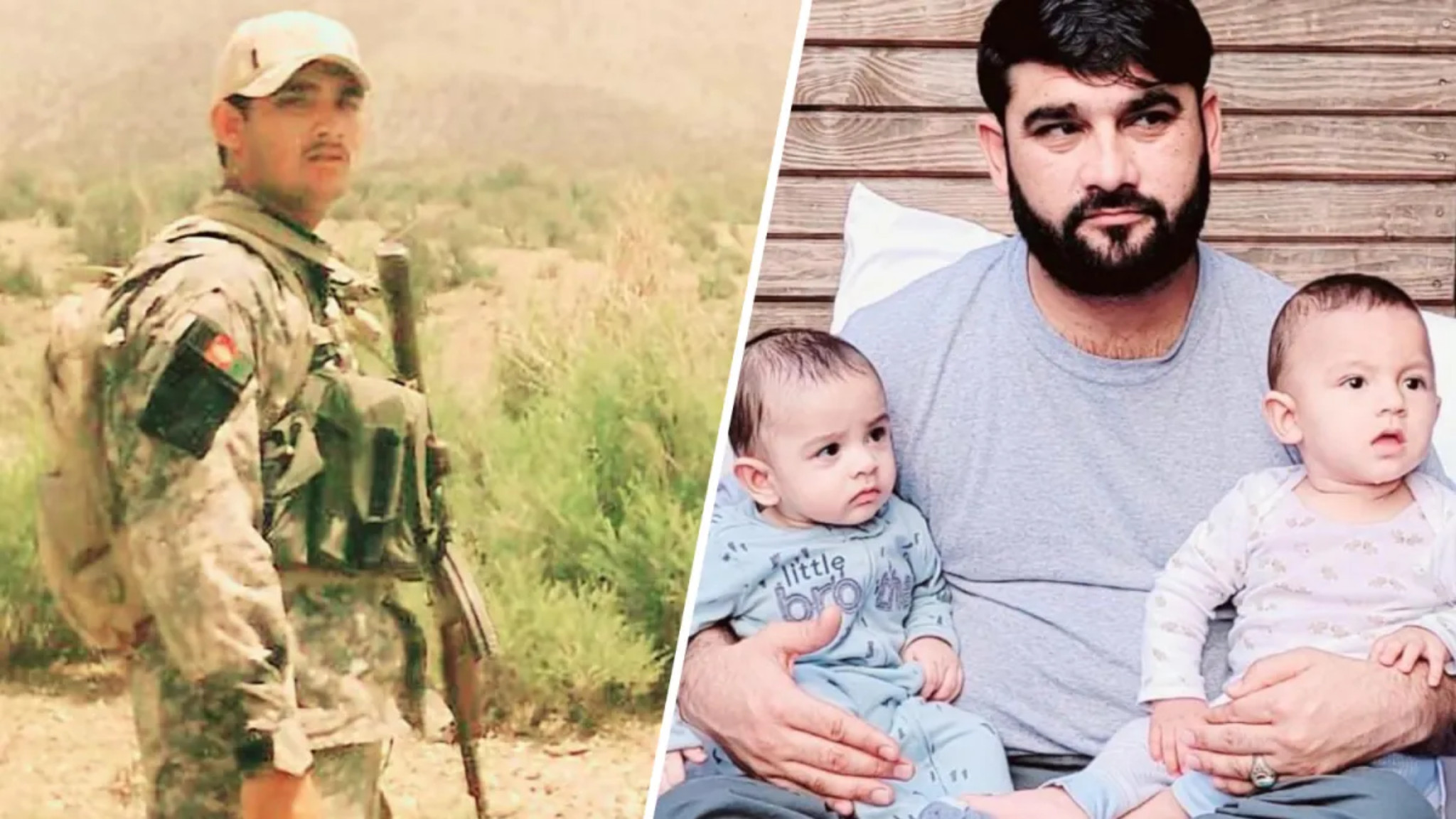
An Afghan ally dies in ICE custody while Trump demands allies to help secure the Strait of Hormuz as the Iran War escalates.
Today’s news cycle contains a contrast so stark it’s hard to ignore.
In North Texas, Mohammad Nazeer Paktyawal, a 41-year-old father of six who once worked alongside U.S. forces in Afghanistan, is dead. He had no known health conditions.
He survived twenty years of war.
He did not survive 24 hours in immigration custody.
According to officials, Paktyawal was arrested by U.S. Immigration and Customs Enforcement (ICE) on March 13 while living with his family in the Dallas area, snatched away from his children during a school drop-off. ICE cited past arrests for SNAP fraud and theft to justify his detention, yet those allegations never led to a single conviction.
Within hours of his detention, Paktyawal complained of chest pain and shortness of breath. He was taken to Parkland Hospital and died the following morning while under detention.
Paktyawal had worked with U.S. forces in Afghanistan for years and came to the United States after the fall of Kabul in 2021. He was living in Texas with his wife and children while awaiting a decision on his asylum case.
He is the 12th person to die in DHS custody already this year – and it is only March.
From Battlefield Ally to Immigration Detainee
Paktyawal’s story is not unusual among Afghan allies.
For years, interpreters, guides, and local partners helped American forces navigate some of the most dangerous environments in the world. Their cooperation often made them targets for the Taliban.
Many were evacuated to the United States precisely because their service made returning home unsafe.
Yet years later, many of those same allies remain trapped in a complicated legal limbo – temporary parole statuses, pending asylum claims, and bureaucratic deadlines that can suddenly turn protection into deportation risk.
Instead of targeting genuine threats, the current immigration system is increasingly ensnaring the “best of the best” – proven partners who have already put their lives on the line for this country.
For families who trusted American promises, the ground can suddenly disappear beneath their feet.
The irony of that reality becomes even sharper when placed beside the rhetoric now coming from the Oval Office.
At the Same Time: “We Will Remember”
While this story unfolded in Texas, President Trump was aboard Air Force One pressing allies to help secure the Strait of Hormuz. His administration is now attempting to assemble a coalition for “Operation Epic Fury,” the U.S. campaign that followed Israel’s Operation Roaring Lion and has rapidly escalated into the multi-region Iran war.
The toll is already severe: 13 American service members and 14 Israelis have been killed, while more than 1,400 Iranians – most of them civilians – have died in the bombing campaign, including an estimated 175 children in a strike on an elementary school in Isfahan. The conflict has spread across the region, with 800+ killed in Lebanon and casualties mounting from Kuwait to the UAE.
Against this backdrop of mounting human cost, Trump’s message to join the war effort was not a quiet diplomatic request. It was a public demand, delivered with unmistakable urgency and expectation.
“I’m demanding that these countries come in and protect their own territory,” Trump told reporters, reportedly expressing frustration that allies weren’t “jumping up and down” for the chance to join.
This demand has now extended even to rivals like China – which is not in NATO – while just days ago he told the United Kingdom, “We don’t need people that join Wars after we’ve already won!”
Hours later he singled out Prime Minister Keir Starmer by name, saying he was “not happy” that Britain – America’s “oldest ally” – had declined to send its aircraft carriers.
“It’s the place from which they get their energy. They should come and help us protect it.”
Trump also explicitly complained that the U.S. was “very sweet” to help with Ukraine (which he noted is “thousands of miles away”), so now allies “owe” it to him to help in Iran.
Yet in the same breath, he dismissed the very partners he was calling on.
“It would be nice to have other countries police that with us,” he said. “But we don’t really need them.”
The contradiction was striking. Trump was simultaneously minimizing the importance of allies while warning them of consequences if they refused, and that the very ‘future of NATO’ depends on whether they join a war they never asked for.
“You could make the case that maybe we shouldn’t even be there at all,” he added. “We have a lot of oil… but whether we get support or not, I can say this, and I said it to them: We will remember.”
The statement was meant as a warning.
But memory works both ways.
And the events that led to today’s confrontation are themselves part of what many governments remember.
The Deal That Was Torn Up
The crisis in the Strait of Hormuz did not emerge out of nowhere.
In 2018, Trump unilaterally withdrew the United States from the Joint Comprehensive Plan of Action (JCPOA) – the Iran nuclear agreement negotiated in 2015 between Iran, the United States, and several European allies.
Under that deal, Iran dismantled large portions of its nuclear program, shipped out enriched uranium, and submitted to one of the most intrusive international inspection regimes ever created.
In exchange, sanctions were lifted and Iran regained access to billions of dollars in frozen assets that already belonged to them.
Trump has repeatedly claimed that the agreement “gave Iran billions of dollars.”
In reality, the deal simply unfroze Iranian funds that had been locked in foreign banks under sanctions. The money was not a payment – it was Iran’s own assets being returned as part of a negotiated agreement.
Now Trump argues that tearing up the deal prevented Iran from obtaining nuclear weapons, claiming that if “Barack Hussein Obama‘s deal” – a middle name Trump emphasizes with a specific sneer to lean into the xenophobia of his base – had remained in place, Iran would have had nuclear arms “three years ago.”
Yet the agreement itself was specifically designed to prevent exactly that outcome.
To many observers, the logic runs in the opposite direction: the United States withdrew from a functioning diplomatic framework that was constraining Iran’s nuclear program and replaced it with escalating confrontation.
And the consequences are visible now.
Iran no longer trusts American commitments.
Allies question whether U.S. agreements will survive the next election.
And a region that was once managed through diplomacy is now being managed through missiles and warships.
The Allies Remember, Too
Several key partners – including Germany, Spain, Italy, and Japan – have already declined requests to send warships into the Strait of Hormuz.
German Defense Minister Boris Pistorius was blunt: “This is not our war; we did not start it.” He noted that neither the United States nor Israel consulted them before the first strikes were launched. Foreign Minister Johann Wadephul confirmed Germany has “no intention of joining military operations.”
Italian Deputy Prime Minister Matteo Salvini was equally clear, stating that ‘Italy is not at war with anyone’ and that sending ships would be an act of entering the conflict.
Meanwhile, Spain has officially banned U.S. aircraft from using shared bases for strikes on Iran, calling the war ‘illegal.’ Spanish Prime Minister Pedro Sánchez told reporters at the Mobile World Congress that the intervention is “unjustified, dangerous, and outside international law.”
Japan’s Prime Minister Sanae Takaichi told parliament that they have no plans to send vessels, citing the legal restrictions of their constitution.
Their hesitation is not happening in a vacuum.
Allies remember that Trump has repeatedly described them as freeloaders. Japan remembers Trump once suggesting that if the United States were attacked, the Japanese would simply “sit home and watch Sony television.” European partners remember Trump’s threats of tariffs and the suggestion that the United States might abandon NATO commitments if partners did not “pay up” – even going so far as saying he would encourage Russia to do “whatever the hell they want” to countries that didn’t meet spending guidelines.
And they certainly remember just a couple of months ago when Trump threatened to use military force to annex Greenland, a territory belonging to Denmark – a founding NATO ally.
They also remember the wars they already fought alongside the United States.
Trump has recently claimed that allies “stayed back” during the war in Afghanistan. The historical record says otherwise.
After the attacks of September 11, 2001, NATO invoked Article 5 for the first and only time in its history—declaring the attack on the United States an attack on all members. Forces from the United Kingdom, Canada, Denmark, Estonia, and many others deployed to Afghanistan and fought alongside American troops in some of the war’s most dangerous regions.
Nearly 1,200 non-U.S. coalition soldiers died in that conflict.
Countries like Denmark and Estonia suffered casualties at rates higher per capita than the United States itself.
To suggest these nations “stayed back” is not just historically inaccurate—it dismisses the sacrifices of families who lost sons and daughters in a war fought in solidarity with America.
And there is another detail that makes the current request even more striking.
Just months ago, the U.S. Navy quietly removed the last four Avenger-class minesweepers – the Devastator, Dextrous, Gladiator, and Sentry— from their base in Bahrain. These were specialized vessels designed specifically to detect and clear naval mines in the shallow waters of the Persian Gulf. They were sent to Philadelphia to be scrapped.
Now, weeks later, Washington is asking allies to send their own minesweepers into the very waters those ships once patrolled.
For many governments, the message feels less like a partnership and more like a demand to clean up a battlefield they had no role in creating.
So when the President says “We will remember,” allies hear something different.
They remember who consulted them—and who didn’t.
They remember who valued their sacrifices—and who dismissed them.
And they remember that alliances built over generations can erode quickly when cooperation becomes a one-way street.
Trust Is the Real Currency of Alliances
History shows that military alliances run on credibility.
If partners believe they will be abandoned once the war ends, fewer people will risk their lives next time.
For two decades in Afghanistan, thousands of local allies were told they were fighting alongside the United States in a shared struggle.
Many believed that promise.
Paktyawal was one of them.
Loyalty Should Not Be Disposable
No investigation has yet determined exactly why Paktyawal died. But the symbolism of his story is already clear.
While the President stands on the world stage warning reluctant nations that “We will remember” their hesitation to join a new, unprovoked war, Mohammad Nazeer Paktyawal’s death shows the world exactly what American memory can look like in practice.
A man who helped U.S. forces survive a two-decade war ended up dying in a Texas detention system, locked up over unproven allegations, while waiting for the country he assisted to decide if he was worthy of staying.
Every nation depends on allies, but alliances are built on trust, not threats. When the United States demands that the world “fight together,” the world watches what happens to the people who already did. Because loyalty that only flows one way isn’t loyalty at all.
It’s a transaction.
And the next time America needs partners in a distant conflict, the memory of Mohammad Nazeer Paktyawal may speak louder than any threat from Washington.
Related: Tehran’s Black Rain and Broken Futures: Why Oil Must Be a “No-Go Zone” in War
War: The Reality Behind the Rose-Colored Glasses
The “47-Year War”: Did the U.S. Actually Start It 73 Years Ago?
The Dirt is Speaking: From Cyrus the Great to the 2026 Fight for Human Rights
Davos 2026: Thank You World for Standing Up to the Bully
Related Me We Too posts:
I don’t think Trump should have started the Iran War.
War should be a last resort – not first resort.
And Trump should not have ripped up the Iranian agreement in 2018.
Iranian people are some of the strongest people in the world #freeiran #iranrevolution #womenrights
A whole World War Three is about to happen but people are worried about who got what filler injected
It is ridiculous that Trump expects to be involved in who Iran chooses as their next leader.
Trump obviously does not care about democracy or freedom in Iran
ICE should not be wearing masks to hide their identity
More often than not, video is the only thing standing between a lie and a life being ruined by it.
Believe your eyes. Not the lies of the Trump admin.
ICE does not have immunity (no matter what J.D. Vance says)
United States Secretary of Homeland Security Kristi Noem is such a liar.
Border Patrol Commander at Large Greg Bovino is a liar.
ICE is so messed up, it needs to be crushed and rebuilt from scratch.
ICE should be defunded until there is MAJOR reform.
Looks like Trump’s government thinks the second amendment is only for those who support Trump.
At this point, if you are a Trump supporter you are against humanity.
Impeach Trump. Make America Great Again!
Hopefully Trump will be impeached soon and out of office
Trump ’25 has been the worst presidency in U.S. history
I can’t imagine anyone wanting to be with an ICE agent – inhumane actions are the fastest turn off







He survived 20 years of war as an Afghan ally, only to die in 24 hours of ICE custody.
As Trump demands allies help secure the Strait of Hormuz, Mohammad Nazeer Paktyawal’s death shows the true cost of one‑way loyalty.
azipurl.app/betrayal
#AfghanAllies #ICE #IranWar #StraitOfHormuz