

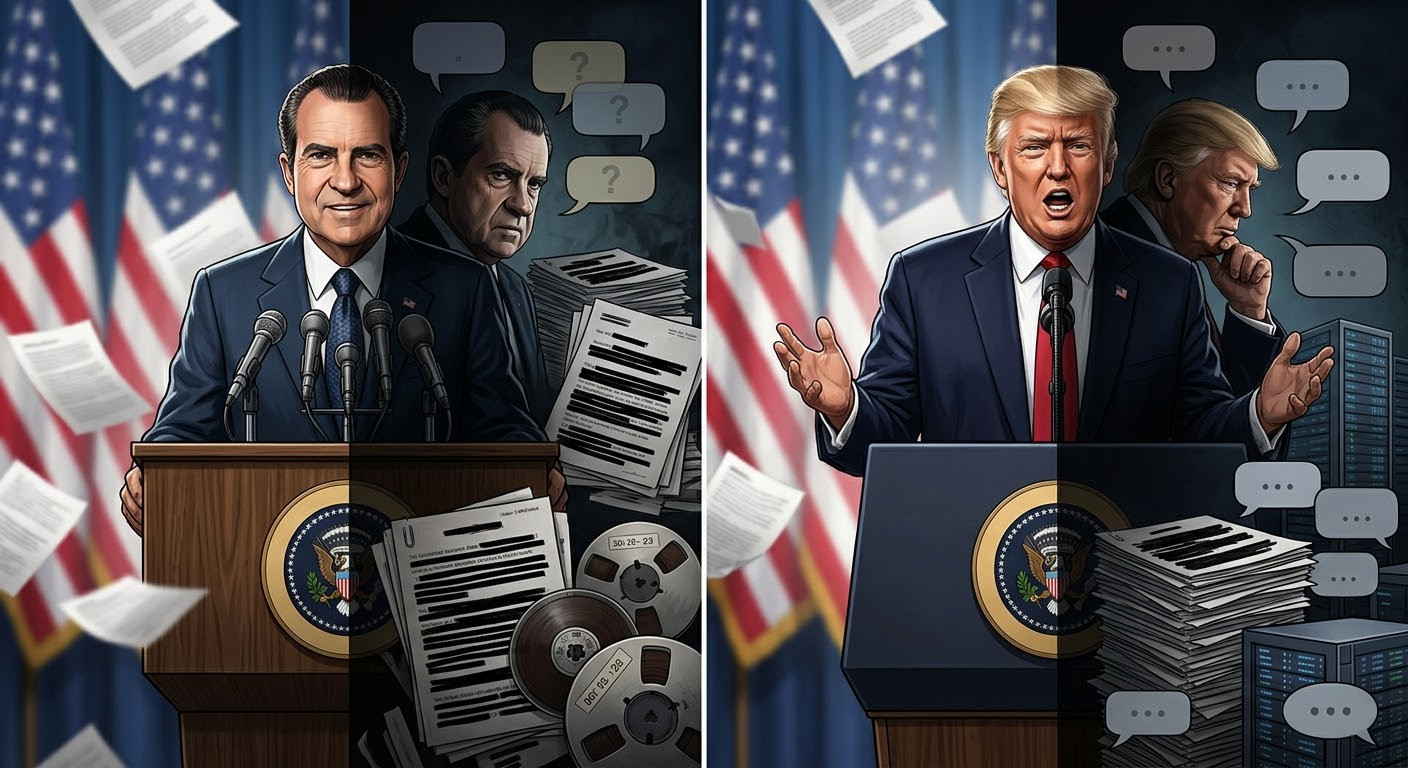
From Richard Nixon’s tapes to the modern “blank check”
History doesn’t whisper.
It contradicts.
A leader can support a nation
while degrading its people.
That contradiction isn’t rare—
it’s a pattern.
Nixon proved it first.
In private,
Richard Nixon spoke in slurs,
counted Jews in government,
warned of a “cabal,”
questioned loyalty.
On tape—undeniable.
But in public policy?
He helped save Israel.
During the Yom Kippur War,
he authorized a massive resupply—
Operation Nickel Grass.
Weapons. Aid. Survival.
Not out of principle—
but strategy.
Israel wasn’t a people to him.
It was an asset.
A Cold War lever.
This is the blueprint:
Support the state.
Disparage the people.
Then came the modern echo.
Donald Trump didn’t hide the support.
Embassy moved to Jerusalem.
Golan recognized.
Policy tilted—hard.
A “blank check,” many called it.
But listen to the rhetoric.
“Disloyal.”
“Vote wrong.”
“Hate their religion.”
The old trope—
dual loyalty—
repackaged.
The same implication:
Your identity is conditional.
Your worth is political.
Nixon said it privately.
Trump said it out loud.
This is the cost of transactional support.
When backing a country
isn’t rooted in respect for its people,
it becomes currency.
A shield.
A talking point.
A defense against criticism.
“Look what I did for you.”
Even while reinforcing
the stereotypes that endanger you.
That’s the paradox.
Protection—
with strings attached.
Support—
without respect.
Safety—
as long as it’s useful.
And that’s not allyship.
That’s a transaction.
Then there is the third way.
Not a transaction. Not a “blank check.”
Bernie Sanders doesn’t trade in tropes.
He is the friend who tells you the truth because he wants you to survive.
He doesn’t offer a shield for a government’s “power play.”
He offers a hand to the people themselves.
He stood on the Senate floor
and broke the silence:
“It is not antisemitic to hold a government accountable.”
He didn’t just speak. He acted.
He led the charge to condition the aid—
support is not a gift for the powerful, but a responsibility to the innocent.
He understands: You don’t protect a people by fueling the extremist fires that put a target on their backs.
You don’t “support” a nation by staying silent while its leaders trade their moral safety for a “power play.”
True allyship isn’t “Look what I did for you.”
It’s standing for the human rights that keep everyone safe—
from the kibbutz to the refugee camp.
No strings. No conditional worth. No “loyalty tests.”
One side offers protection as long as you’re useful.
The other offers respect because you’re human.
That’s the difference between a deal—
and a principle.
That’s the difference between a transaction—
and an ally.
Related: The Holocaust, the Orphanage, and the 2026 Warning: The Sovereignty of the Soul
The Senate’s Vote on Israel Arms Sales: A Defining Choice Between War and Accountability
The Grammar of Silence: Mayor Mamdani and the “Private” Language of City Hall
The Blueprint for a Registry: How the “Penn List” is a Threat to Every Minority in America
Related Me We Too polls:
It is crazy that the Trump admin & EEOC is suing Penn to get a list of Jewish students and staff.







Nixon said it in private. Trump said it out loud.
When support becomes transactional, allyship turns into leverage.
From Nixon’s tapes to the modern “blank check”—and the question of what real allyship looks like.
Read: azipurl.app/nixon-trump
#Politics #HumanRights #Trump #Nixon #USPol